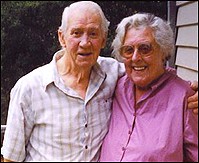
Arthur and Pat Holley in retirement near Melbourne
|
Ava Archive |
Ava Hubble, Australian Free Lance Journalist,
has been a great supporter of the Frozen Pension cause over the years.
Many of her articles on the subject have been published in the Weekly Telegraph,
and other papers.
On this page we will be publishing a selection of her writing.
Thanks Ava - for all your good work and dedication.
If you would like to contact Ava and send her your stories and/or opinions on where we should go from here you can e-mail her at ava.hubble@s054.aone.net.au
Expats Angry -
A veteran of Churchill's War Room
- Beating the freeze
We shouldn't be fighting -
D-Day veteran caught -
Expats appalled
Australia attacks Britain -
Why British
pensioners are being Down Under-Paid
Expats angry at lack of Tory support over pensions
By Ava Hubble in Sydney - Weekly Telegraph (Filed: 09/03/2005)
British expatriates fighting for an end to the Government's refusal to unfreeze state pensions are angry that a parliamentary move to scrap the policy has failed to win the support of the shadow welfare minister, Paul Goodman.
Mr Goodman, Conservative MP for Wycombe and former shadow minister for work and pensions, has refused to support an Early Day Motion (EDM) calling for the end of the frozen pensions policy, which penalises expats who retire to 48 mainly Commonwealth and former Commonwealth nations.
Their pensions are frozen at the UK rate in force on the date they begin to draw them overseas. Those who retire to EU nations, the USA and most other non-Commonwealth nations receive the same regular cost-of-living rises as pensioners resident in the UK.
An EDM is used to draw attention to an issue and elicit the support of other MPs. Nick Harvey, Liberal Democrat MP for North Devon, recently initiated EDM 529, advocating parity for the 480,000 expatriates currently affected. It has been signed by 74 MPs but has not yet been tabled.
Mr Goodman was asked to support the motion by a member of the British Australian Pensioners' Association, Peter Morris, who has challenged Government claims that Britain cannot afford to grant parity to the penalised expats.
Mr Morris argued that since the National Insurance Fund has a surplus of £20 billion in excess of forecast claims, it can afford the estimated annual £400 million cost of unfreezing affected pensions.
In response Mr Goodman said that while he believes the frozen pensioners have a good case, he will not be supporting EDM 529: it was not Conservative Party policy to do so. He also noted that the National Insurance Fund's surplus might be required for the relief of British workers who have lost their expected occupational pensions.
Mr Goodman said that some of his own constituents "have effectively been robbed of their (occupational) pensions" because of the purchase and later controversial closure of the Glory Paper Mill near High Wycombe by the German firm, Felix Schoeller.
Mr Goodman's response has outraged the Adelaide-based British Australian Pensioners' Association (BAPA). "So now we are told the National Insurance Fund could be raided to prop up private pension funds left short by employers," James Nelson, BAPA committee member, complained last week.
He pointed out that hundreds of thousands of expatriate retirees, including Second World War veterans, who contributed to the NI fund throughout long post-war working lives, are now living in straitened circumstances because of the frozen pensions policy.
"We've been fighting for years for parity," he protested. "Now we're told people who contracted out may be deemed to have a superior claim to its resources."
He also referred to a trip to Pakistan taken by Mr Goodman, after which he said that he wanted to get to know the place where 10 per cent of his constituents came from. Mr Nelson pointed out that Pakistan is one country affected by the frozen pensions policy.
"In other words, if after spending their working lives in the UK, some of Mr Goodman's constituents decide to retire to their homeland, they too will be penalised by the policy," he said. "Yet Mr Goodman says he won't sign EDM 529."
Last week, five Law Lords in London reserved judgment on an appeal against the Government's frozen pensions policy by Annette Carson, a Briton living in South Africa. She lost her case in the High Court and in the Appeal Court but won the right to a Lords appeal.
The Adelaide-based BAPA, as well as the Sydney-based British Pensioners in Australia organisation, are among the expat pensioner groups which have been urging their eligible members to register to vote in the forthcoming UK General Election. Eligible expats and supporters have also been encouraged to contact their MPs to ask them to support the Early Day Motion.
A veteran of Churchill's War Room
By Ava Hubble Weekly Telegraph -
(Filed: 15/11/2004)
Early in 1941 Flight Sergeant Irene Clayton-Pearson, then 18, and a member of
the Womens' Auxiliary Air Force (WAAF), began a pilot's training course at White
Waltham in the UK.
She was in the midst of training when a high level decision was made to discontinue the Second World War course for women. Subsequently, she was summoned to London to be considered for a new posting as an aircraft plotter in Winston Churchill's Whitehall War Cabinet Room.
She was selected and immediately ordered to report for duty. She says the interview process included a meeting with Churchill himself.
These days Irene and her husband of over 50 years, retired career British Army officer Bob Clayton-Pearson, live in Sawtell, a township on the mid-north coast of New South Wales. They are active members of the local returned services league and the British Pensioners in Australia organisation. Needless to say, Irene is often asked to talk about her own war service.
"I was a country girl from a Worcestershire farm," she explains. "I found working underground in the War Room a nightmare, especially at first. The Battle of Britain period was the most testing, because we had to work in dense dust. It came in through the air-vents [during the intense bombing in central London]."
Irene also recalls the very long shifts. "You stayed on duty as long as there was work to be done," she says. "There were metal bunks further below where you could go for a short sleep from time to time. We weren't allowed to smoke. Churchill was the only one allowed to smoke. We always knew when he was about because we could smell his cigar. Food was in very short supply and heavily rationed. One was lucky to get the odd sandwich in the War Room."
Fortunately, there was a Red Cross soup kitchen nearby. "It helped us survive," she says. "But we weren't often allowed to go up into the street. During the bombing no one was allowed above ground." Notices were posted.
Yet the most harrowing days of her life came in the wake of an "All Clear", when her WAAF watch was given leave to exit for rest and refreshments. They made their way to the "huge house in Nightingale Square" which the authorities had requisitioned for the WAAFS from the bandleader, Geraldo.
Irene remembers making her way to this mansion, along badly bomb-damaged pavements. "When we got to the house, three of us immediately dashed upstairs to see if there was water for showers," she says. "The others headed for food in the basement."
Those in the basement were killed when a bomb, which hit the house next door, also brought down Geraldo's home. Irene was in the shower at the time. "I remained there for three days until I was rescued," she says. "Then I found out that many of my friends had been killed."
Irene is quick to scotch the idea that she was a teenage heroine who rushed to enlist at the outbreak of the war. In 1938, after completing her finals at Worcester College, having studied German, she joined the Voluntary Aid Detachment (VAD), mainly because participants were offered a pound a week.
"We learnt about first-aid and fire prevention," Irene explains. "It was only when war broke out the next year that I discovered that by joining the VAD I had committed myself to war service. I was called up in 1939. By then I spoke pretty good German, and French. My mother was French."
She immediately applied for pilot training. In the early months of the Second World War women pilots were considered useful for such assignments as ferrying newly-manufactured aircraft from factories to airfields.
Irene, however, was initially appointed ("as a vetted subject") as secretary to the commander of the RAF's Oxfordshire operations station in Bicester, Group Captain Bently. Her subsequent pilot training was aborted, just as she was about to begin the "solo flying" stage. She says the top brass cancelled the course after four female British women pilots, including the famous Amy Johnson Molllison, went missing en route home to Britain from the United States. "The women were blamed for the loss of badly-needed aircraft," she explains.
In 1943 Irene was transferred to Bletchley Park to work on the Enigma machines and contribute to the intense, around-the-clock efforts to break the German naval code. "It was the most soul-destroying job," she recalls. "You sat, hour after hour, puzzling away, trying to decipher the meaning of groups of letters and figures. For security reasons, you didn't attempt to exchange a greeting, let alone compare notes, with whoever it was who happened to be sitting next to you."
After the war Irene was appointed secretary to Stuart Granville-Smith, one of the British judges who conducted war-crimes trials in Germany following the Allied victory. "We started off in Munster," she recalls. "It was totally devastated. There was not one building left standing. There was nowhere to live. Simply moving about, over rubble mostly, was a challenge."
Eventually they were "moved on" to the undamaged township of Arnsberg in the Saarland, where they were billeted in the "magnificent home" of the industrialist, Rudolf Krupp. From there, they would travel daily to Essen and elsewhere for the court cases.
Irene met her husband-to-be, Bob Clayton-Pearson, in Germany. During the war he served in the Middle East, Italy and Germany. They were married in 1952 in Powick, Worcestershire. After their subsequent Army postings to Hong Kong, Malyaya, Uganda, Kenya, the Sudan, Somalia, and Oman, they both worked for several years administering United Nations food, health and education programmes.
Irene says they fell in love with Australia during their first visit, in 1960, when they stopped off for a look-see while "trooping home" after an Army posting in Malaya. They returned for holidays time and again. By the time of their retirement in the early 1990s, one of their son, one of three children, had settled in Australia with his wife.
Meantime, since their retirement, the octogenarian Irene and Bob Clayton-Pearson have found themselves battling on, amid the ranks of Britain's increasingly impoverished frozen pensioners. "I can't help feeling bitter sometimes," admits Irene. "Bob and I contributed to the National Insurance Scheme for well over over 40 years [from the time of its post-war inception until their late retirement in 1992]."
Yet since they retired to Australia 11 years ago, their British pensions have been frozen at the 1993 rate of about around £56 a week.
This is because the UK Government does not index the pensions of all Britons who retire to certain countries - mainly Commonwealth and former Commonwealth nations.
The Clayton-Pearsons admit that they were aware of the ramifications of the frozen pensions policy when they came to live in Australia in 1993. But Irene points out that the Labour Party, then in opposition, was campaigning (like the UKIP today), on a platform that included introducing equal pension rights for all expats, irrespective of their retirement domicile.
The promises were not kept. In consequence the value of the un-indexed pensions of thousands of expatriates, including the Clayton-Pearsons, has continued to dwindle, year by year. "We now survive only because of Bob's supplementary Army pension," complains Irene. "It was awarded at 1972 rates, but it is indexed."
British pensioner associations around the world are amassing details of ex-servicemen and women and other expatriate war veterans, including fire-fighters and associated Civil Defence workers, who have become impoverished because of the frozen pensions policy.
The case histories will be despatched to the Law Lords prior to the House of Lords appeal, early next year, of the South Africa-based British frozen pensioner, Mrs Annette Carson.
Beating the freeze back in Britain
By Ava Hubble Weekly Telegraph -
(Filed: 04/10/2004)
Retired National Health Service pharmacist, Len Goldstein, 85, and his radiographer wife, Heather, 67, seem to be living the life of Riley. They spend nine months of the year in Buderim. It's a sub-tropical paradise about 60 miles from Brisbane and close to some of Queensland's most beautiful Pacific Ocean beaches. Heather grows star fruit, passion fruit, mangoes and many other exotic fruits with "relative ease" in their garden.
The couple generally return to the UK in May each year to spend three months at their pied-a-terre in Arundel, Sussex. "We like to go home to see the children, plus new additions to the family," explains Heather. "Ours is a second marriage, for both of us. We have five children between us, none of them mutual."
The Goldsteins emigrated in 1989 to join Heather's parents who had settled in Queensland for health reasons. Her father has since died. Her mother, like the Goldsteins themselves, is now among Britain's 500,000 expatriate frozen pensioners. So how are Len and Heather able to maintain their enviable lifestyle?
They explain that they also receive supplementary NHS pensions which are regularly uprated in line with cost-of-living rises. Len currently receives an NHS pension of around £170 per week. His National Insurance Scheme aged pension, however, has been frozen since his emigration at the 1989 UK rate of around £43 per week.
Heather, 18 years his junior, receives a partial NIS frozen aged pension of £40 per week, plus a partial NHS pension of around £40. She points out that although she was employed by the NHS for over 17 years, they were not consecutive years. Consequently her NHS pension was calculated on her maximum period of consecutive service: 7.6 years. "I was in and out of the NHS because my first husband died when I was 33, leaving me with three small children," she explains.
Although the Goldsteins are the first to concede that they are not on the breadline, Heather confesses that like Mrs Bennet in Jane Austen's Pride and Prejudice, she finds herself constantly fretting about the future. "We'll be alright as long as we keep Len alive," she says - to the wry amusement of her husband.
Heather stresses, though, that they manage to go home each year only because of "very careful budgeting". She says she is relentless in pursuit of no-fee credit card offers, generous airline loyalty offers and supermarket specials. "Fortunately, we are both alcohol intolerant," she jokes. "We generally make do with the Queensland ginger beer which is very good. We lace it with tonic water."
She also points to the importance of their UK pied-a-terre. "Our Arundel flat is minuscule, but we can go there without putting anyone out," she explains. "Getting it was the luckiest thing in our lives.
"We bought it quite a few years ago from a 92-year-old man. He and his ladyfriend, who lived in the same retirement block, enjoyed visiting each other. But they worried about scandalising their neighbours. So they moved in together in a nearby village. He let us have his flat for less than he paid for it."
Heather also notes that their trips home are made more affordable because their NIS pensions are "defrosted" for the duration of their stay. Whenever frozen pensioners go home, even for only a couple of weeks, they are entitled to claim the full weekly UK pension (currently £79.60), or, in the case of partial pensioners like Heather herself, the pro-rata equivalent.
"It can make a huge difference," she stresses. "The increase for the two of us, over a three-month period, adds up to about £800. That covers the cost of one return economy air fare." But she advises fellow frozen pensioners that it is not possible to apply for the uprating in advance and that, in her experience, it is not paid until after departing the UK.
What you have to do, she explains, is ring the Department of Work and Pensions as soon as you arrive. She warns that you will probably be answered by a recorded voice, which will ask you to briefly explain the reason for your call and to leave a contact number for reply.
Heather recommends that you comply and then "head straight for the nearest post office" to follow up your application in writing. "Be persistent," she urges. "Keep in touch with the DWP until you are satisfied your claim is being processed."
Heather recalled the long battle she and her husband had to secure their uprating after their visit home last year. "The DWP insisted there was no record of either our phone call or our follow-up letter," she reports. "We were told that because we had not immediately notified them of our arrival in the UK, we were not entitled to the uplift. Yet we had barely unpacked before we got a letter from our bank, asking if we were still entitled to a tax-exempt account, since it appeared we were again operating the account in the UK."
The Goldsteins are members of the British Australian Pensioners Association, one of many organisations campaigning for State pension parity for all expatriates who contributed to Britain's mandatory National Insurance fund.
British retirees in most EU and NATO countries are not affected by the frozen pensions policy. It penalises only those living in most Commonwealth and former Commonwealth nations.
Heather, however, complains that expatriates, and particularly frozen pensioners, are being increasingly discriminated against.
"During the war my husband spent six years in the Army," she points out. "He served in West Africa. He later spent 33 years working for the NHS. During all that time he contributed to two pension funds. He worked countless hours of unpaid overtime in the NHS. We both did.
"Now, when we go home, because of the new regulations affecting expats, we are not even allowed to consult an NHS doctor without charge."
She noted that the British government is currently penalising the insurance industry for mis-selling pensions. "But that's exactly what the government has done," she protested. "We were told that if we paid into the NIS, we would receive an index-linked pension.
"We were not told there would be no uprating if we retired to certain parts of the world. In any case, who has a crystal ball? I had no idea, when I was working, that I would find myself living in retirement in Queensland."
Heather says that had she known, she would have "begged and borrowed" to try to keep up her contributions to the fully-indexed NHS scheme.
Yet she says it's the associated "petty meanesses" of the frozen pensions policy that she often finds most alienating and provoking. "My husband is entitled to the octogenarians supplement, but only when he is resident in the UK," she adds.
"We are not allowed the pensioners' heating allowance, even though we have to pay rates on our Arundel flat and arrange for it to be heated during the winter in case the pipes burst. We are not allowed the pensioners' Christmas bonus."
She recalled that her parents were ordered to refund theirs. "It was paid to them in the November before they left for Australia and demanded back a few weeks later, virtually on Christmas Eve, as soon as the DWP caught up with the paperwork and realised they had emigrated."
If Heather finds herself widowed again, she says she could not manage alone in Australia. "I would have to return to the UK where I could claim free prescription medicines and other benefits," she explains. "I hate the idea of having to apply for a supplementary Australian pension. It would not be fair to the Australians."
Why, she wonders, does Britain persist with its frozen pensions policy. "It makes no financial sense," she argues. "Imagine the drain on the health budget if we are all forced to go home for good."
Meantime, the policy costs the Australian taxpayer in excess of £50 million annually in benefits to 160,00 expatriates who can no longer survive on their UK aged pensions, some of which have not been uprated for 20 years or more.
'We
shouldn't still be fighting . . .'
By Ava Hubble Weekly Telegraph -
(Filed: 10/08/2004)
Arthur Holley was born 92 years ago in East Greenwich, London, and began his working life at Britain's Oxo factory in 1928.
|
|
Arthur and Pat Holley in retirement near Melbourne |
In 1939, when the Second World War was threatening, he was recruited to the London Fire Brigade and was stationed at the Southwark sub-branch, near London Bridge.
During the war, a wing of the station was hit by a flying bomb. Holley escaped injury because he was out on duty at the time, helping to cope with another emergency. His station was hit again when it was operating out of temporary headquarters in London's Lilian Bayliss School. Once again, Holley was out fighting another fire.
"I was lucky," he says. "We got back to find the place in shreds. We often wouldn't get home for days."
He particularly remembered the docklands fires. "I hope I never see anything like that again," he said.
He was decorated for his life-saving rescue work at the Surrey Commercial Docks on Sept 7, 1940. He later received the Defence Medal, the London Fire Brigade Council Medal and the Queen's Long Service Medal.
When he left the brigade in the mid-1960s, he began a 10-year-stint as a fire officer at the House of Commons. He says that if he had known then what he knows now, he would have taken every opportunity to waylay politicians about Britain's frozen pensions policy.
Because of that policy Mr Holley's pension has been frozen at £38.30 a week since 1985, when he and his wife, Pat, emigrated to Australia. Mrs Holley, 87, receives a partial frozen pension of about £20 a week. The current full British pension is £79.60 a week.
"We were cut off dead because we retired to Australia," Mr Holley protested.
The frozen policy also affects expatriates who retire to 47 other Commonwealth and former Commonwealth countries. It does not, however, affect Britons who retire to most non-Commonwealth nations. They receive the same regular cost of living increases as UK-based pensioners.
Mr Holley is a member of the British Australian Pensioners Association (BAPA), which points out that while most parliamentarians now admit that the policy is discriminatory, Whitehall continues to argue that Britain can't afford to change it. That idea is fiercely challenged by BAPA's actuary, James Nelson, who argues that it was recently officially announced that the National Insurance Fund had a surplus of about £30 billion.
The annual cost of granting parity to all of Briton's half million frozen pensioners is estimated at a comparatively small £400 million. Those expatriates include former servicemen and women. "They've done their fighting. They shouldn't have to fight for their pensions," Mr Holley complained.
He and his wife married in June 1940. They had no plans to leave the UK when he retired in the 1970s. But then their son and two daughters moved to Australia.
"We went to see them in 1983," Mr Holley reported. "That's when we decided to emigrate, but we didn't think it would take us two years." They had trouble selling their house in Kent. "People kept pulling out at the last minute," he explained. "It happened three or four times. We were worried that we would have to renew our documents.
"We thought we'd have to go through all the health and security checks again." The couple now have a house in Balwyn, near Melbourne, where their son has settled.
They are hopeful that the South Africa-based frozen pensioner Annette Carson, 64, wins her House of Lords appeal early next year.
A decision in her favour could lead to the abolition of the frozen pensions policy and a more carefree life for expat retirees. Yet victory, even if it comes, will come too late for some, including many war veterans who campaigned for years against the policy. "There's not many of us left," Mr Holley said.
D-Day veteran caught in frozen pension trap
By Ava Hubble Weekly Telegraph -
(Filed: 06/06/2004)
John Redfern is one of about 220,000 expatriates in Australia suffering from the British Government's frozen pensions policy.
Despite his six years of war service and his subsequent contributions to the National Insurance Scheme over 20 years, Mr Redfern, 81, receives only a partial (60 per cent) British pension.
He has no complaint about that. He explains that he did not keep up his contributions after he emigrated to Australia in 1966 with his wife and son. But he does resent the fact that his pension of £27 a week has not been increased since he began drawing it in 1984.
|
|
|
|
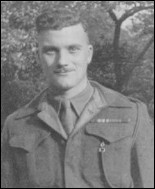
John Redfern in wartime uniform, circa 1946 |
This is because the Government does not grant regular cost of living rises to expatriates who retire to Australia and most other Commonwealth and former Commonwealth countries. Yet Whitehall does regularly increase the pensions of expatriates who retire to the United States and many other non-Commonwealth countries, including all the European Union nations.
The chairman of the British Pensions in Australia organisation, Jim Tilley, says that if parity were extended to all expatriates, Mr Redfern would now be entitled to 60 per cent of the current British pension of £79.60 a week. "He would be getting about £48 a week," he said.
Mr Tilley wrote to the Australian prime minister, John Howard, asking him to raise the matter of parity with Tony Blair during his visit to Britain for the D-Day anniversary celebrations. Mr Tilley suggested that Mr Blair should be reminded that he has not kept Labour's promise to grant equal rights to all British pensioners, including all expatriate pensioners.
Australia's Department of Veterans' Affairs supplements Mr Redfern's British pension. It currently costs the Australian taxpayer about £50 million annually in assistance to British expatriates who cannot survive on their frozen British pensions.
Australia has repeatedly asked successive British governments to relieve it of this expense. South Africa and Zimbabwe are among the countries that offer no assistance to expatriate Britons impoverished by the frozen pensions policy.
An appeal by Annette Carson, a South Africa-based expatriate, against the Government's continued refusal to unfreeze her pension is to be heard by the Law Lords next February.
Expats appalled at UK pensions fiasco
By Ava Hubble in Sydney Weekly Telegraph -
(Filed: 30/06/2003)
News of the failure of Mrs Annette Carson's appeal in the frozen pensions case, which we reported last week, prompted exasperated protests from Australia-based expatriates as well as the Australian government.
Brian Havard, Adelaide-based president of the British Australian Pensioner's Association, attacked the appeal judges and Mr Justice Stanley Burnton, who ruled against Mrs Carson in the High Court last year. "They have shown themselves totally subservient to parliament," he claimed. "There is supposed to be a separation of powers between the judiciary and parliament.
"The Carson case was a legal matter, but they threw it back to the politicians who will now continue to do what they like."
In his ruling last year, Mr Justice Burnton, concluded: "In my judgment, the remedy of the expatriate pensioners who do not receive uprated pensions is political, not judicial. The decision to pay them uprated pensions must be made by Parliament."
Mr Havard also accused the judiciary of scaremongering. "I understand the appeal judges estimated that it would cost about £3 billion to grant pension parity to all expatriates," he said. "But that figure would include back payments, and the estates of deceased pensioners. "Yet we have never sought retrospectivity, only parity as of here and now."
He said this cost had been estimated at £400 million a year. "That also sounds a terrifying figure," he said. "But it is less than one percent of the UK Government's current annual aged pension bill of approximately £45 billion."
Another Australia-based expatriate who has been leading the campaign for pension parity, Jim Tilley of Sydney, is also concerned at the "apparent bias" of the judiciary during the Carson case and the appeal. "What the judges seems to be saying," he complained, "is that although the frozen pension policy is discriminatory, it cannot be changed because of what they claim to be the daunting cost to the government."
Australia's Senator Amanda Vanstone, Minister for Family & Community Services, has revealed that she visited the UK Secretary of State for Work and Pensions, Andrew Smith, last year to advise him that the Australian Government considers the frozen pensions policy discriminatory. In a media release last week she claimed that Mr Smith had "made it clear that the UK Government is not concerned about its pensioners overseas and that it will continue to focus on those in the UK."
Mr Tilley said he was "appalled" by this. " We're talking about men and women who paid into the UK's mandatory pension fund through long working lives," he protested.
"By living outside the UK, they are saving the UK the cost of their health care. They are easing the UK's housing problem. Yet they are penalised."
Mr Smith's office said he had nothing to add to an earlier statement that the ruling had vindicated existing practice.
Mr Havard said that before the matter can be referred to the European Court of Human Rights it is necessary to exhaust legal avenues in the UK. Mrs Carson was refused permission to take her case to the House of Lords, but Mr Havard says it may still be possible for her to ask the Lords to review the matter.
Mr Tilley reports that more than 160,000 British expatriates now depend on their Australian entitlement, because they can no longer survive on their UK pensions "The immoral cost to Australia now exceeds $A100 million (£40 million) a year," he says.
Mr Tilley, a chartered management accountant also claims that recent actuarial figures reveal that the UK Government has £27.6 billion in its pension reserve fund.
Australia attacks Britain over frozen
pensions
By Ava Hubble Weekly Telegraph -
(Filed: 27/06/2003)
The Australian Prime Minister, John Howard, has renewed his criticism of the British government following last week's Appeal Court ruling that expatriates' pensions can remain frozen in some countries, including Australia.
"We have been lobbying the British Government for years," he said. "But so far they've been completely unwilling to change."
"Our view is that the British Government should have fully indexed British pensioner recipients. This is very important in particularly South Australia and Western Australia where there is an above average number of people who were born in the United Kingdom."
The British policy costs Australia about $100 million (£40 million) a year in topping up British expat pensions.
Amanda Vanstone, the Australian minister for family and community services, said: "It's disgraceful that the UK Government takes the contributions from their pensioners during their working lives and then refuses to index those pensions in retirement if a pensioner chooses to live in Australia rather than, say, the United States. It is morally wrong.
"The indexation issue remains a priority for this Government and I will personally take every opportunity to resolve this matter and to pursue a better outcome for the 221,000 UK pensioners in Australia who are affected by the UK's discriminatory policy.
"Australia indexes every one of the pensions or benefits it pays to former residents living overseas. Most other countries behave the same way.
"The UK's penny pinching policy is well out of step with international practice in this area and the UK Government needs to reverse its indefensible position."
Why British
pensioners are being Down Under-paid
By Ava Hubble Weekly Telegraph -
(Filed: 01/03/2002)
THE British Australian Pensioners' Association (BAPA) plans to demand equal pensions from Tony Blair during his visit to Australia for the Commonwealth Heads of Government Meeting, which is due to begin in Brisbane on Saturday.
British expatriates living in Australia - as well as 47 other Commonwealth countries - have been fighting to have their old-age pensions brought into line with those paid to counterparts in the United Kingdom. At the moment, their pensions are frozen at the rate in force at the time they retired overseas.
For example, although the current weekly UK old-age pension is £75.50, a British pensioner who retired to Australia in 1990, when he or she reached pensionable age, is still only entitled to a pension at the 1990 UK rate of £46.90.
According to figures from Australia's Department of Work and Pensions, about 490,500 expatriates currently receive such a frozen pension. Almost half of that number reside in Australia.
BAPA is now hoping to mount a legal challenge to this policy in the UK. The organisation has received support from MPs in Australia for this and MP Peter Slipper has called for the Australian government to provide financial support.
BAPA spokesman, British retiree Jim Tilley of Sydney, said many of those pensioners find they are unable to survive on a small frozen UK pension and have been dependent for years on additional support from the Australian taxpayer. Currently expatriates who are resident in Australia are entitled to claim an Australian old age pension of about $A200 (approximately £70) a week. That sum, however, is subject to a means test.
It is also reduced by 40 cents in the dollar if the pensioner receives income of more than $A56 a week by way of a UK pension or from any other source.
BAPA's research has revealed that it currently costs the Australian Government over $A100m a year to supplement the incomes of expatriate UK pensioners who, if paid at the same rate as their counterparts in the UK, they could live independent of any support from the Australian taxpayer.
The organisation hopes that their campaign will encourage Australian Prime Minister John Howard to raise the issue with Tony Blair while he is in Australia.
BAPA is currently working to get the Australian taxpayer on side through the Australian media. Mr Tilley said most people are very surprised to learn that British expatriates have been drawing on the Australian old-age pension since the early 1950s. "They tend to think you've got the wrong end of the stick."
BAPA has had some success. The issue has begun to make the Australian papers and it is hoped radio and television coverage will follow, Mr Tilley said.
BAPA members would very much like to see Tony Blair grilled on Australian television as to why expatriates receive a reduced, frozen UK pension. There are signs that Australia is already wearying of that policy. It recently introduced legislation that prohibits British pensioners who arrived in Australia after March 31, 2001 from making any claim on the Australian taxpayer for 10 years.
The Queensland-based BAPA member, Mr David Waterhouse, will co-ordinate BAPA's media campaign during the Commonwealth meeting. His e-mail address is: yeomanoz@yahoo.co.uk
Mr Waterhouse said that Britons who retire to EU countries, as well as the United States, Israel and Turkey, already receive parity with their UK counterparts.